L+R Consulting has built a rare asset: four decades of multi-sector experience across aviation, defence, mining and transport, delivered from Brisbane to multi-state projects. That depth and sector spread are present in the site content but not highlighted where procurement teams and project owners look, so high-value briefs and shortlist spots are being missed. The 5.0 Google rating with only one review and a national search rank around 387,250 show the firm’s offline strength is not converting into visible online proof.
Your online reputation
5
Google star rating
1
Verified reviews
Medium
Reputation strength
Google Business Profile
Your online presence — what the data reveals
AI Visibility
Low
Authority Score
14
out of 100
Organic traffic
288
est. monthly visits
Traffic Trend
-37
%
past 12 months
Organic Keywords
124
ranking terms
Keyword Trend
-55
%
past 12 months
Backlinks
4015844
total
Paid traffic
0
0 paid campaigns
Digital maturity
Level 2
out of 5
L+R has two genuinely hard-to-replicate assets: a 40+ year project history across high-bar sectors like aviation and defence, and a broad referral footprint of 2,676 referring domains and over 4 million backlinks. Those assets signal deep experience and strong industry connections that competitors would struggle to match. If the website presents those strengths clearly and in procurement-friendly ways, L+R can start turning enquiries into shortlist invitations and higher-value briefs.
How your website scores
TECH STACK
UX OBSERVATIONS
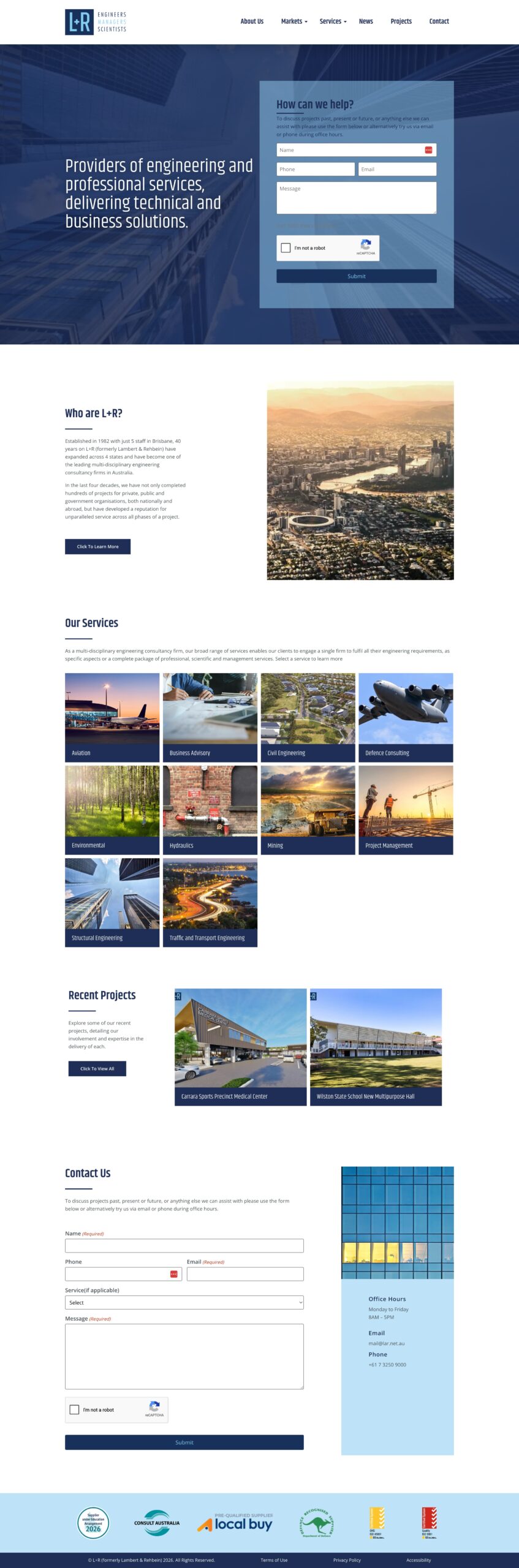
The hero prioritises a contact form over credibility; asking for contact details before visible proof points increases friction and reduces the likelihood of high-value enquiries from procurement teams.
Accreditations and supplier badges are relegated to the footer and lack visual weight; this under-signals credibility and fails to reassure risk-averse public sector buyers quickly.
Service tiles are visually uniform and not prioritised by sector or value; this fails to structure decision-making for buyers with complex briefs and weakens conversion into shortlist opportunities.
With only about 258 monthly organic visits and national search rank near 387,250, most procurement teams will not find L+R when they search for shortlist candidates. Organic visibility has fallen, with traffic down roughly 37 percent and keywords down about 55 percent, so the firm’s existing projects and credentials are not driving the right kind of attention. As a result, opportunities from public and private sector tenders are going to better-presented firms, not necessarily better-qualified ones.
The three gaps holding you back
What's possible when these gaps are closed
Make the 40+ year track record and the 5.0 rating obvious on pages procurement teams use, not buried in an about page. Collect and publish targeted project testimonials and client statements so that the single Google review becomes a sample of sector-specific social proof that buyers can rely on.
Create clear, sector-specific service packages for priority markets such as aviation, defence and transport so buyers can see scoped offers quickly rather than a long undifferentiated list. Replace the one-size contact form with three tailored contact paths, each matching the language and outcomes procurement teams expect, to turn the current traffic into shortlist-ready enquiries.
Lift the visual weight and outcome focus of the existing projects so each case study reads like a procurement brief, emphasising measurable outcomes, timeframes and stakeholder partners. With organic traffic near 258 visits a month and visibility low, making each visit count by fronting sector outcomes will increase the chance that project owners shortlist L+R for high-value briefs.
This report was prepared by Redfox Digital using publicly available SEO, UX and reputation data.