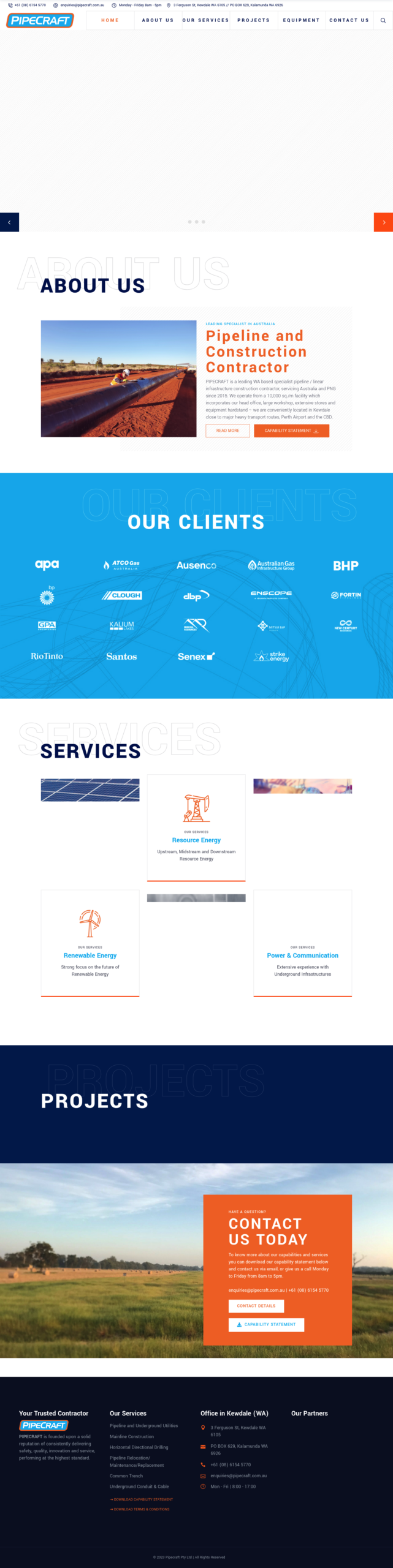
Pipecraft has built real-world credibility through DNV certification and named projects with APA, Mitsui and ATCO across Western Australia and PNG. You operate as a specialist pipeline and trenchless contractor in Perth and hold a flawless 5.0 Google rating from five reviewers. That reputation is not converting because online case materials and contact paths do not match how tender teams verify suppliers, so procurement opportunities are being missed.
Your online reputation
5
Google star rating
5
Verified reviews
High
Reputation strength
Google Business Profile
Your online presence — what the data reveals
AI Visibility
Low
Authority Score
9
out of 100
Organic traffic
137
est. monthly visits
Traffic Trend
+5k
%
past 12 months
Organic Keywords
21
ranking terms
Keyword Trend
-24
%
past 12 months
Backlinks
213
total
Paid traffic
0
0 paid campaigns
Digital maturity
Level 2
out of 5
Your DNV certification and recent projects for APA, Mitsui and ATCO across WA and PNG are rare assets that would be difficult for competitors to copy. If those credentials are packaged as short, verifiable case studies with clear contact points, procurement teams can be converted into near-term commercial enquiries.
How your website scores
TECH STACK
UX OBSERVATIONS
Trust signals (client logos, capability download) are visible but not carrying enough visual authority or evidence (certifications, project KPIs, case outcomes) to convert procurement‑grade prospects.
The page explains capability broadly but fails to structure buyer decision paths; equal‑weighted CTAs and a generic contact flow dilute conversion intent for tendering or commercial enquiries.
Visual system is competent but commercially underpowered; template cues (large hero slider, oversized background words) and inconsistent CTA emphasis weaken premium or specialist positioning and encourage casual rather than procurement interactions.
With about 140 sessions a month and a national search rank near 580,000, relatively few procurement teams are finding Pipecraft at the moments that matter. That low visibility means the DNV certification and high-profile clients are not being seen in tender assessments, so commercial enquiries remain limited. A 5.0 Google rating from five reviewers is a positive signal, but by itself it will not replace short, verifiable project proof in buyer checks.
The three gaps holding you back
What's possible when these gaps are closed
Packaging DNV plus the APA, Mitsui and ATCO projects into one-page case studies makes those credentials usable in procurement reviews. Each case study should state outcomes, measurable metrics and a verifier so tender teams can validate claims quickly, turning evidence into action rather than passive text.
Build verticalised service pages that map HDD, in-service welding, mainline construction and common trench work to resource, energy and renewables scopes. Clear mapping helps tender teams find the exact capability they need and improves rankings beyond the current 19 keywords, so the right buyers land on the right pages.
Add a procurement contact, tracking and a short qualification flow to the capability statement and project pages so downloads become identifiable leads. With about 140 visits a month, converting even 5 percent into contactable enquiries would create roughly seven meaningful leads to target for upcoming tenders.
This report was prepared by Redfox Digital using publicly available SEO, UX and reputation data.