Statiker has built a genuine multidisciplinary practice in Sydney delivering structural, stormwater, geotechnical, surveying and traffic engineering to architects, developers, builders and homeowners across Australia. The business claims more than $100m of projects and has some backlink presence, yet a public Google rating of 1.0 from a single review and few sector-specific case studies mean commercial buyers see low public credibility before they see project evidence. That gap is actively costing shortlist opportunities with developers and architects who make decisions from public listings and project pages.
Your online reputation
1
Google star rating
1
Verified reviews
Low
Reputation strength
Google Business Profile
Your online presence — what the data reveals
AI Visibility
Low
Authority Score
8
out of 100
Organic traffic
0
est. monthly visits
Traffic Trend
%
past 12 months
Organic Keywords
101
ranking terms
Keyword Trend
+336
%
past 12 months
Backlinks
107
total
Paid traffic
0
0 paid campaigns
Digital maturity
Level 1
out of 5
You have hard to copy assets: multi-discipline capability across five engineering services and a claimed project portfolio in excess of $100m. You also have growing search footprint, with keywords up from 22 to 96 and an existing backlink base of 107 links from 33 referring domains. If the digital presence catches up, those assets could convert into regular, qualified shortlist opportunities from developers and architects.
How your website scores
TECH STACK
UX OBSERVATIONS
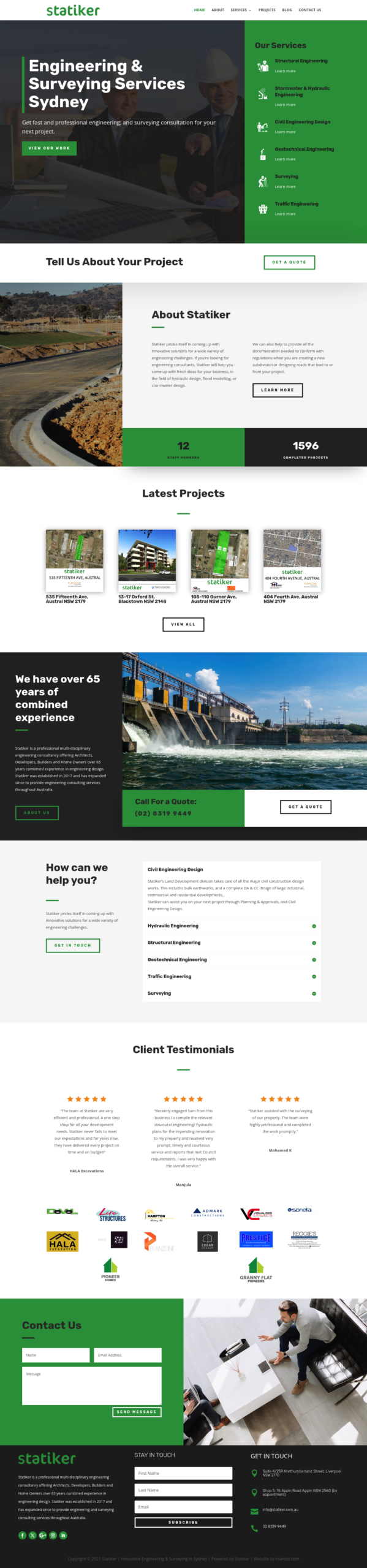
Conflicting metrics (12 staff, 65 years combined, 1596 completed projects) create a credibility gap that prompts scepticism and reduces conversion intent.
Split hero layout with a competing services panel and multiple CTAs fragments attention, preventing a single clear path to request a quote.
Logos and testimonials are present but low prominence and lack project-level proof, under-signalling sector-specific authority for architects, developers and builders.
A public 1.0 rating from one review will often be the first thing commercial clients see, which undermines the $100m project claim before anyone reads a case study. An authority score of 8 and a national search rank around 3,030,404 mean most target searches are not finding a convincing presence despite keyword growth to 96. With no visible systems to capture or measure enquiries, leads are likely ad hoc and you cannot rely on digital channels to supply consistent, qualified commercial briefs.
The three gaps holding you back
What's possible when these gaps are closed
Make the listing and key project pages tell the same story as your $100m portfolio. Address the single 1.0 review and publish three evidence-rich commercial case studies that show budgets, outcomes and your role so developers and architects find corroborating proof where they decide. That simple alignment reduces the chance prospects drop you from shortlists.
Create distinct pages and role-based case studies for architects and for developers and link them to the services they care about so the copy stops reading as repetitive. Convert the keyword growth from 22 to 96 into targeted landing pages that match how high-value buyers search and what they need to see to shortlist a consultant. Clear specialisation makes it far easier for decision makers to pick you over generalists.
Introduce tracked contact paths and basic enquiry logging so every lead is recorded and attributed to a page or campaign rather than relying on individual effort. With an authority score of 8 and Low visibility, measuring which pages produce qualified enquiries lets you focus fixes where they matter and turn ad hoc leads into a predictable pipeline. Over time that gives you the data to scale what works and stop relying on chance referrals.
This report was prepared by Redfox Digital using publicly available SEO, UX and reputation data.