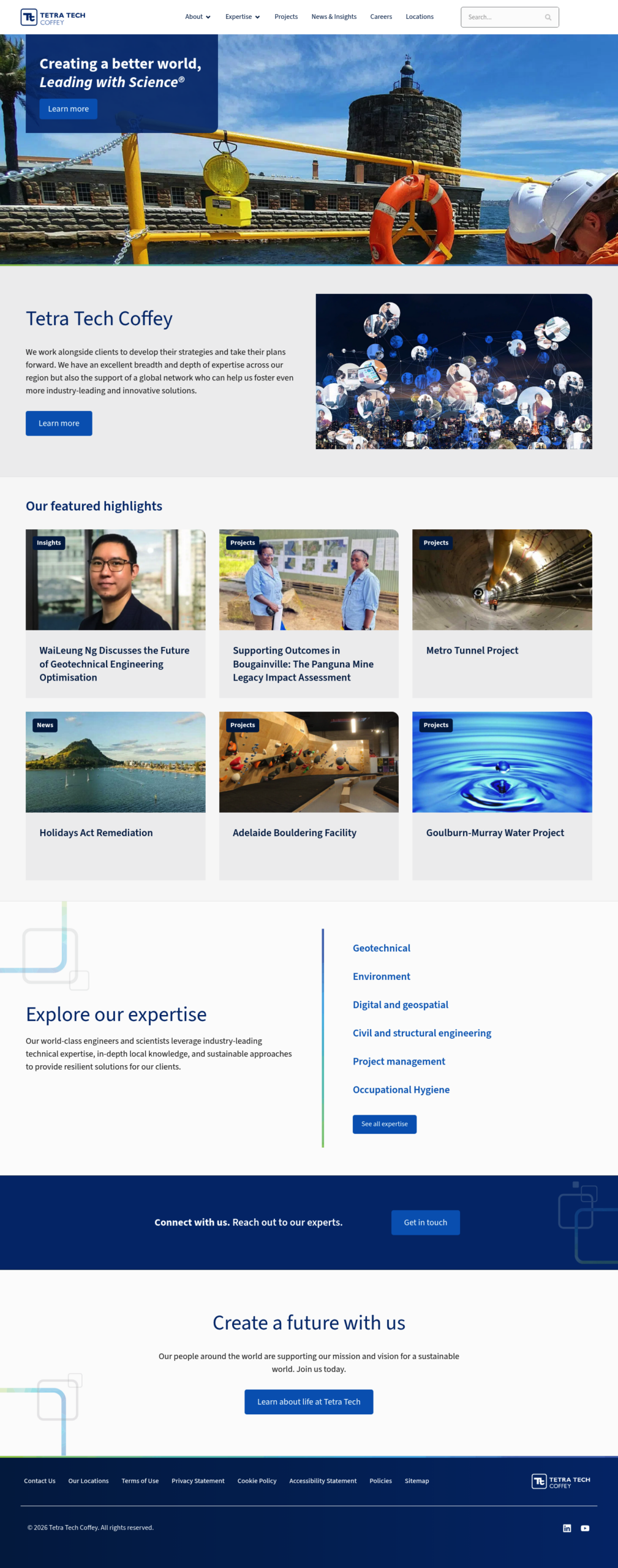
Tetra Tech Coffey has built real regional scale and reputation as the Asia Pacific arm of Tetra Tech, with roughly 550 staff and an extensive referral footprint (10,829 backlinks from 1,109 referring domains). Yet that offline strength is not translating online: organic visibility has slumped from about 1,250 to roughly 191 monthly visits, the Google listing has only three reviews despite a 4.7 rating, and buyers in government, infrastructure and resources cannot quickly find or validate your capability. That gap is costing inclusion on procurement shortlists and leaving commercial conversations stalled.
Your online reputation
4.7
Google star rating
3
Verified reviews
High
Reputation strength
Google Business Profile
Your online presence — what the data reveals
AI Visibility
Low
Authority Score
24
out of 100
Organic traffic
182
est. monthly visits
Traffic Trend
-85
%
past 12 months
Organic Keywords
17
ranking terms
Keyword Trend
-97
%
past 12 months
Backlinks
10829
total
Paid traffic
0
0 paid campaigns
Digital maturity
Level 2
out of 5
The strongest assets you already own are hard to replicate: a regional delivery network of about 550 staff backed by the global Tetra Tech brand, and an unusually broad backlink profile of 10,829 links from 1,109 referring domains. Together those assets give you real credibility and reach that competitors will struggle to match. If your digital presence is adjusted to surface that proof and a clear enquiry path, those advantages can be converted straight into more shortlist invitations and higher-value bids.
How your website scores
TECH STACK
UX OBSERVATIONS
Hero is aspirational but non-specific, failing to state who the firm serves or the outcomes delivered; consequence: commercial buyers cannot self-identify quickly and will pause the shortlist decision.
Trust signals are present but not carrying enough authority; absence of client logos, measurable project outcomes or procurement cues dilutes credibility with decision makers and under-signals sector leadership.
Hierarchy and CTAs favour editorial exploration and 'learn more' actions rather than enquiry or procurement paths; consequence: conversion intent is weakened and enquiry friction increases.
The traffic collapse from around 1,250 to about 191 monthly visits and the fall from roughly 761 to 22 keywords means qualified buyers are not finding you at the moment they search. A national search rank near 500,836 and an authority score of 24 underline that your offline reputation is not being reflected in search presence. The result is missed shortlist inclusion and delayed or cold commercial conversations with procurement teams.
The three gaps holding you back
What's possible when these gaps are closed
Convert the existing regional scale and brand into visible procurement proof so you appear on more shortlists. With ~550 staff and 10,829 backlinks to leverage, restoring organic visibility from ~191 toward previous levels near 1,250 visits would make your capability discoverable to project owners and procurement teams. That visibility directly increases the chances of being asked to tender rather than being overlooked.
Make the homepage say exactly who you serve and what measurable outcomes you deliver so buyers can self-identify in seconds. Current UX scores show message clarity at 3 and conversion focus at 2, so tightening the hero to name government, infrastructure and resources outcomes will reduce hesitation and speed shortlist decisions. Clear, targeted language will turn casual visitors into qualified enquiries more often.
Use project outcomes, client logos and outcome numbers to build procurement confidence rather than relying on capability statements alone. Right now services and About copy describe capability without measurable results; adding a handful of procurement-focused case studies and strong call-to-action pathways will make it easier for buyers to include you on shortlists. That change converts credibility into actionable enquiries and moves stalled conversations toward bids.
This report was prepared by Redfox Digital using publicly available SEO, UX and reputation data.