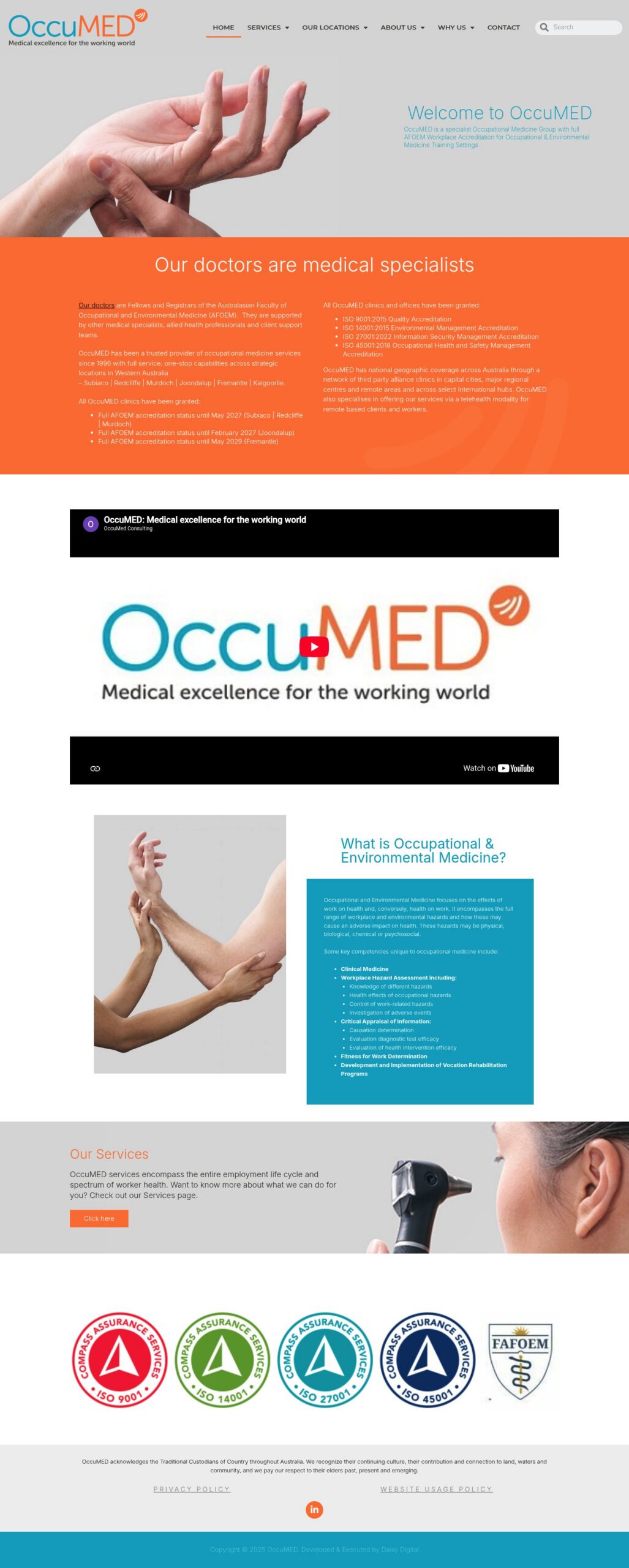
OccuMED has built deep clinical credibility: AFOEM-accredited physicians, continuous operation since 1996 across five Perth clinics, and telehealth coverage across Western Australia, with a steady organic footprint. Yet the public presentation leans consumer, so procurement teams and safety managers cannot quickly see employer packages or outcomes and are not awarding contracts. A visible Google rating of 2.4 from 19 reviews and an authority score of 22 create a clear mismatch between your offline standing and what buyers find online.
Your online reputation
2.4
Google star rating
19
Verified reviews
Medium
Reputation strength
Google Business Profile
Your online presence — what the data reveals
AI Visibility
Moderate
Authority Score
22
out of 100
Organic traffic
1291
est. monthly visits
Traffic Trend
+2
%
past 12 months
Organic Keywords
305
ranking terms
Keyword Trend
+22
%
past 12 months
Backlinks
424
total
Paid traffic
0
0 paid campaigns
Digital maturity
Level 2
out of 5
Your strongest assets are specialist clinical authority and a long WA footprint: AFOEM accreditation and three decades of service since 1996 across five Perth clinics plus telehealth statewide. Those credentials, paired with a growing organic keyword set of 305 and roughly 1,291 monthly visits, are hard for a new competitor to replicate. If the online presence is reworked to speak directly to procurement and corporate buyers, those assets can be turned into higher-value employer contracts and long-term partnerships.
How your website scores
TECH STACK
UX OBSERVATIONS
Trust signals exist but are de-emphasised; accreditation badges and AFOEM claims are low-salience which dilutes perceived clinical seniority and reduces confidence for procurement-level buyers.
Hero and content hierarchy fail to direct decision-making; large copy blocks and a decorative image push a clear buyer path off-screen and undermine conversion intent for employers seeking fast proof of capability.
Visual tone is competent but not authoritative; soft palette, generic imagery and spread-out credibility elements create commercial friction when asking buyers to assign premium value or sign multi-site contracts.
Although you attract about 1,291 visitors a month and rank for 305 keywords, a low Google rating of 2.4 from 19 reviews and an authority score of 22 erode procurement confidence and block employer enquiries. The current site experience pushes individual bookings and presents many undifferentiated service options, so traffic is not converting into the organisational contracts that match your specialist capability.
The three gaps holding you back
What's possible when these gaps are closed
Lead with AFOEM accreditation and three decades of WA service since 1996 across five clinics to reassure procurement teams and safety managers. Featuring sector-specific case studies and clear team credentials will neutralise concerns raised by a 2.4 Google rating and make it easier for buyers to move to formal enquiries and tenders.
Package your services into employer-focused offerings that show outcomes, timelines and pricing bands so a safety manager can see the right option in one click. With 305 keywords and about 1,291 monthly visitors already finding you, a concise employer pathway can turn a meaningful share of that traffic into organisational leads and RFPs.
Replace consumer imagery and individual booking CTAs with enterprise-focused messaging and CTAs such as Request proposal and Employer enquiry, guided by the site UX scores (message clarity 3, trust 3, conversion 2, visual maturity 3). That shift will align visual tone and calls to action with your senior clinical team and help lift the small number of employer contacts that currently reach you into actionable proposals.
This report was prepared by Redfox Digital using publicly available SEO, UX and reputation data.