
web development sydney
Custom WordPress builds, engineered to perform
The problem
Your website may be holding back the business it represents.
A website can look acceptable and still underperform. It may be difficult to update, slow to load, hard to navigate, poorly structured for search, or disconnected from CRM, marketing, and reporting systems.
The issue is rarely just design or development. The issue is structural.
Many WordPress sites are built around pages, templates, and plugins, but not around the organisation’s commercial model. They describe the business, but do not support how buyers think, compare, and make decisions.
A rebuild should not be a cosmetic decision. It should solve a structural problem.
Signs your website has reached its limit:
- The website no longer reflects the organisation's positioning
- The CMS is difficult for the team to manage
- The site is slow, unstable, or technically constrained
- Service pages are unclear or weak
- Organic visibility is held back by technical or content issues
- Conversion pathways are weak or missing
- The platform cannot support the next stage of growth
Our view
A website is infrastructure, not a product.
At Redfox, WordPress development sits inside Digital Infrastructure. The website is not treated as a standalone output. It is part of the wider digital growth system, connected to positioning, experience, content, acquisition, automation, and performance.
Digital Infrastructure means scalable digital foundations that support marketing, sales, and operations – including custom WordPress development, CMS architecture, platform integration, CRM alignment, and conversion-focused build structures.
A website should be easy to manage, technically sound, search-ready, secure, flexible, and clear for the people using it.
Good WordPress builds are invisible. They do their job and stay out of the way.
What we do - web development sydney
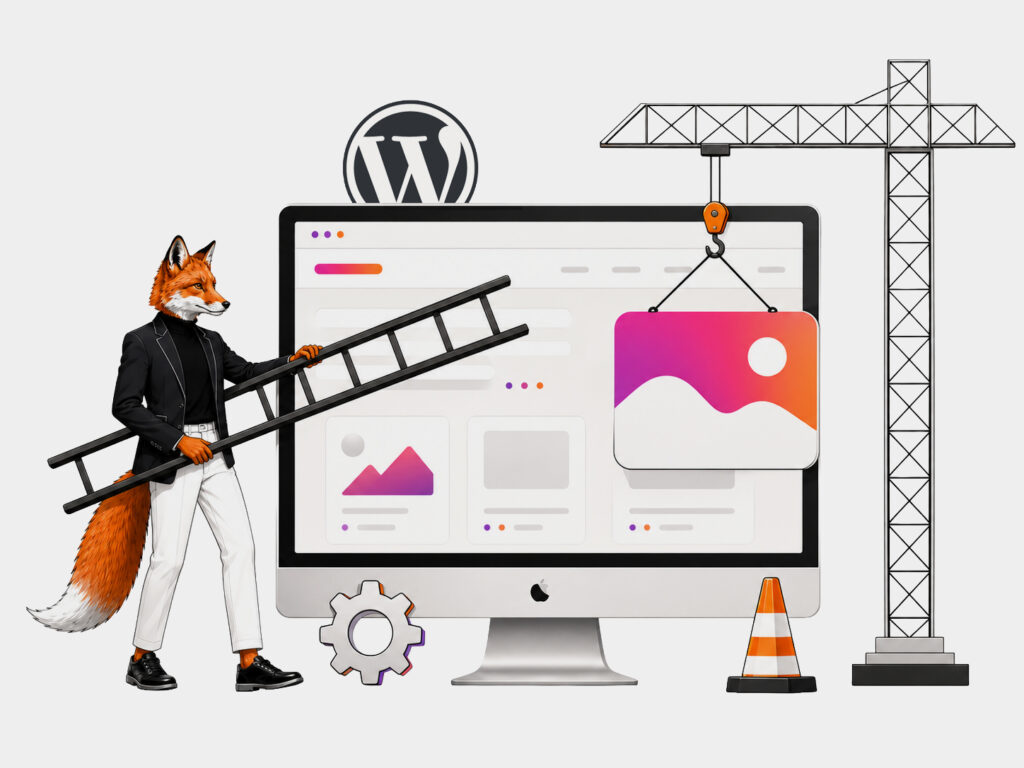
Custom WordPress development for structured growth
We design and build WordPress websites that support long-term digital maturity. Every build is shaped around one question: what does this website need to support over time, not just on launch day?
- Custom WordPress theme development
- CMS architecture and content modelling
- Flexible page and content systems
- Custom post types and taxonomies
- Service page and content modelling
- Performance engineering and Core Web Vitals
- CRM and marketing platform integration
- Analytics and tracking implementation
- SEO-ready development foundations
- Editorial workflow design
- Accessibility-conscious front-end development
- Migration and rebuild strategy
Tech stack and approach
Lean stack, deliberate choices, no shortcuts
We use WordPress because it is mature, extensible, owned by the client, and well-suited to long-lived digital infrastructure. We do not bolt on what we do not need.
Every plugin, integration, and architectural decision is made against one question: does it serve the organisation over the next three to five years?
The right stack is the smallest stack that meets the brief properly.
Our standard build foundation includes:
- Custom theme based on a minimal parent
- Block editor or Elementor, used with constraint
- ACF and ACF Extended for structured content
- Custom post types and taxonomies where content earns it
- Performance budgets enforced at build time
- Image optimisation, lazy loading, and asset discipline
- Security hardening and access controls
- Staging, version control, and clean deployment paths
CMS architecture
A CMS your team will actually use
A WordPress website is only useful if the team can manage it with confidence. Poor CMS architecture creates friction. Pages become difficult to edit. Layouts break. Content drifts. Teams avoid making updates. The website slowly becomes stale.
We design CMS structures that give teams flexibility without creating chaos: modular sections, reusable components, structured service pages, editable blocks, clear field logic, sensible permissions, and editorial workflows that match the way the team actually works.
The aim is control without fragility. The team should be able to update the site without needing a developer for every sensible change.
If the team avoids the CMS, the CMS is broken.

Performance engineering
Speed is structural, not cosmetic
Performance is not a feature. It is a baseline expectation that compounds across the system.
Integrations
A platform that connects, not a silo that doesn't
A modern WordPress build rarely operates alone. It connects to CRMs, marketing automation, analytics, forms, booking systems, dashboards, and increasingly to AI and automation layers.
We architect integrations so data moves cleanly between systems, lead flow is reliable, and the platform supports commercial operations rather than complicating them.
When someone takes action on the website, the business should know what happened and what needs to happen next.
A website that does not talk to the rest of the business is a brochure with a contact form.

Conversion architecture
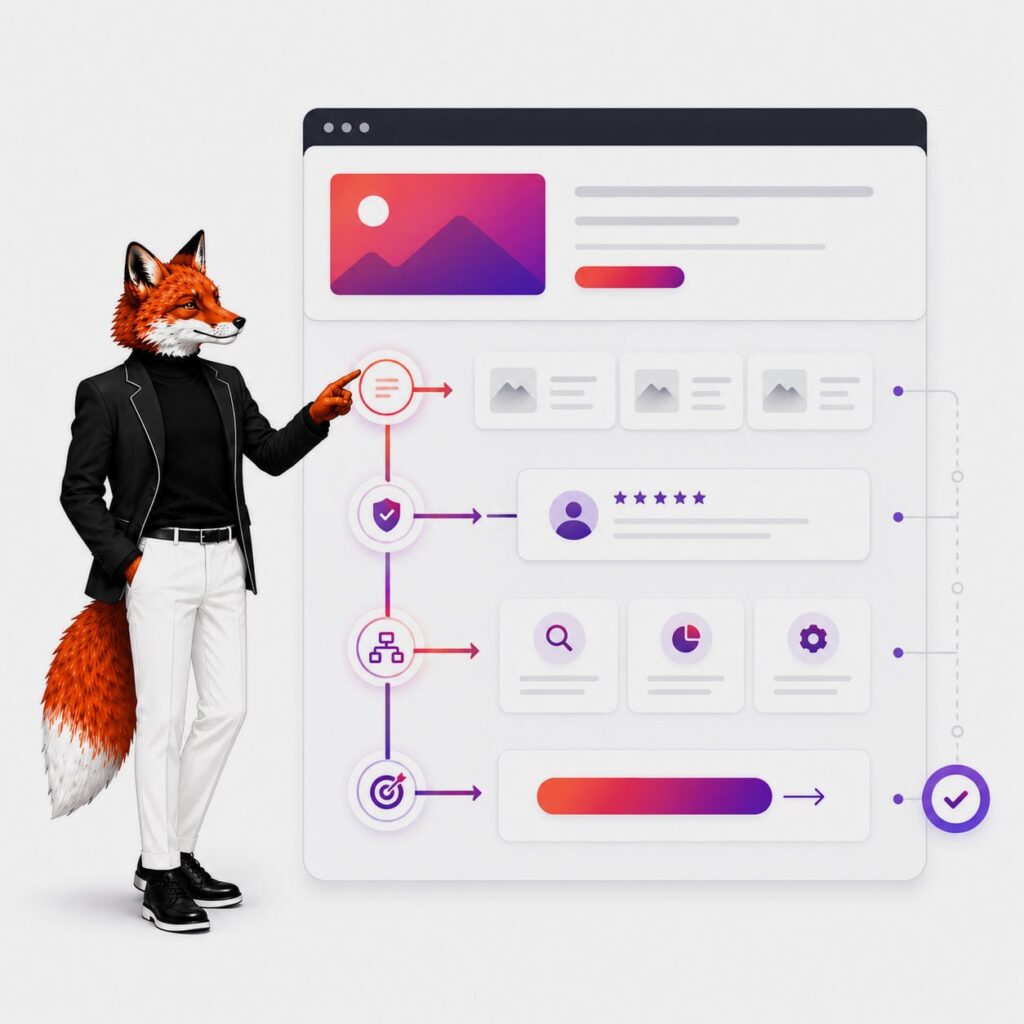
A website should guide action, not just present information
Many websites are built around what the organisation wants to say. Better websites are built around what buyers need to understand.
We develop WordPress websites with clear page objectives, calls to action, enquiry pathways, proof integration, service page decision logic, and content hierarchy designed to support how buyers actually move through a decision.
Conversion does not mean pressure. It means clarity.
The user should know where they are, why it matters, and what to do next.
WordPress Web Accessibility
Good infrastructure should be usable
A website needs to work for people. That means it should be readable, navigable, responsive, and usable across devices and common user needs.
We take an accessibility-conscious approach to WordPress development: semantic HTML, keyboard-friendly interaction, considered colour contrast, readable layouts, clear form labels, logical heading structure, alternative text, and predictable navigation.
Accessibility is not just compliance thinking. It is good experience design. And good experience builds trust.

web development for
Built for organisations that need stronger infrastructure
Suited to organisations that:
- Have outgrown their current website
- Rely on the website for credibility, enquiry, or growth
- Need better alignment between marketing, sales, and digital systems
- Want a CMS the team can actually manage
- Need stronger SEO, UX, and conversion foundations
- Care about long-term stability, not launch-day presentation
Not suited to organisations looking for:
- A quick template
- The cheapest possible build
- A website disconnected from commercial strategy
Our process -web development sydney
A structured approach to WordPress builds
01
Assess
Review the current website, content structure, journeys, technical foundations, integrations, and commercial requirements. Understand what is limiting performance and what the next platform needs to support.
02
Architect
Define the website architecture before development begins: sitemap, page templates, content models, conversion pathways, CMS requirements, integrations, and measurement logic.
03
Develop
Build the WordPress platform using clean, flexible, maintainable development practices. The build focuses on stability, performance, CMS usability, technical SEO, and long-term scalability.
04
Integrate
Connect the website to the systems it needs to support — CRM, email, analytics, forms, automation, dashboards, and relevant third-party tools.
05
Launch
Manage launch carefully: pre-launch testing, redirects, analytics checks, performance review, and deployment planning. Launch is a controlled transition, not a handover moment.
06
Optimise
Support ongoing improvement through performance monitoring, content refinement, and strategic review. A strong website should improve after launch.

Where systems meet
The platform should support the whole system
WordPress development is not the whole digital growth architecture. It is the part that holds the rest of it together.
A well-built platform supports positioning by giving the organisation a credible digital presence. It supports audience journeys, authority, acquisition, and conversion by structuring how people find, evaluate, and act. And it supports enablement by connecting cleanly to the CRM, marketing, and reporting systems behind it.
Digital Growth Architecture defines the structure. Digital Growth Systems operationalise it. The website is where the two meet.
Common questions about web development
What people often ask us.
Why WordPress?
Because it is mature, extensible, owned by the client, and well-suited to long-lived digital infrastructure. With a properly engineered build, it scales further than most alternatives without the lock-in or licensing cost of proprietary platforms.
Do you use Elementor or the block editor?
Both, depending on the build. Each has trade-offs. The decision is made on editorial needs, performance targets, and the team’s working preferences, not on a default.
Do you use templates?
We do not treat templates as the strategic starting point. The structure, content, UX, and CMS requirements should be defined first. From there, the build approach is shaped to fit the organisation, not the other way around.
How long does a typical build take?
Most engagements run between twelve and twenty weeks, depending on scope, integrations, and content readiness. Larger or more complex platforms run longer. We define timelines once architecture is clear.
Can the site integrate with our CRM and marketing tools?
Yes. Integrations are part of the architecture, not an afterthought. We design data flow before we build screens.
Will the website be SEO-friendly?
Yes. SEO-ready development is part of the build approach: technical foundations, crawlable structures, metadata control, heading hierarchy, performance, and content architecture support.

Built for what's next - web development sydney
Build a platform that can carry the next stage of growth
If your website no longer reflects the maturity of your organisation, the problem may not be cosmetic. It may be structural.
Redfox builds WordPress platforms that align positioning, content, infrastructure, and conversion into a stronger digital foundation. If your current platform is limiting growth, rebuild it once, properly.