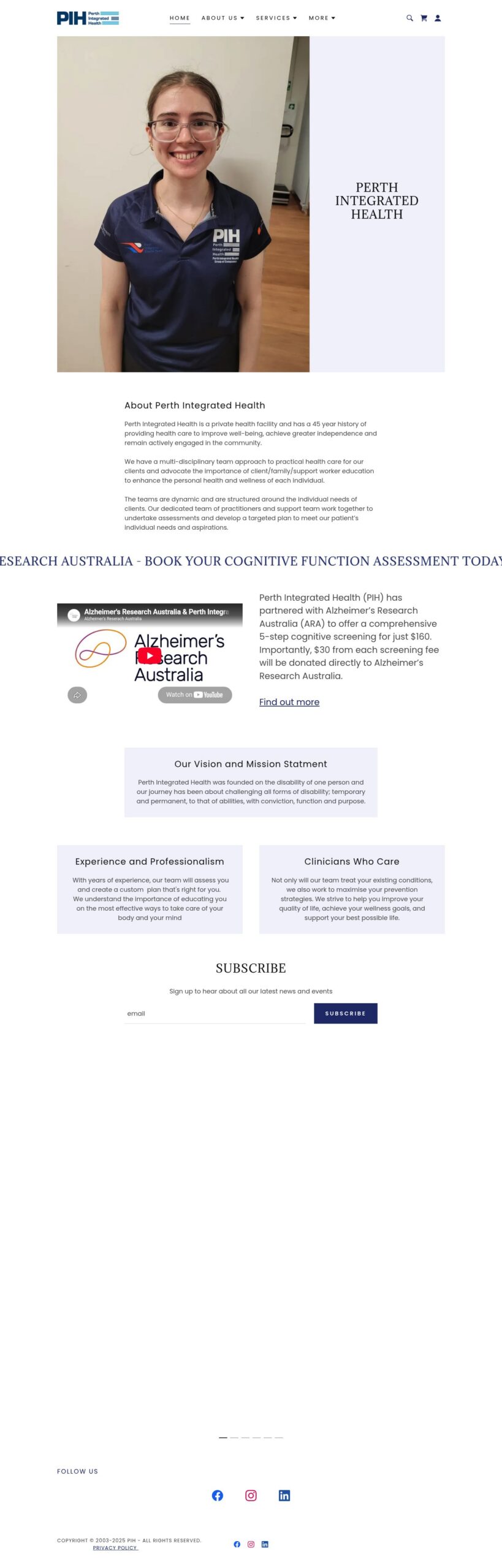
You have built a long-standing multidisciplinary rehabilitation practice in Perth with a 45-year clinical reputation and services spanning occupational therapy, exercise physiology and assistive technology across Western Australia. The website, however, presents a narrow single-therapy impression, buries clinical proof and hides easy referral paths. That mismatch is costing you referrals and bookings from professional referrers and complex-need clients who stop exploring once they misclassify your services.
Your online reputation
3
Google star rating
6
Verified reviews
Medium
Reputation strength
Google Business Profile
Your online presence — what the data reveals
AI Visibility
Low
Authority Score
16
out of 100
Organic traffic
277
est. monthly visits
Traffic Trend
+1
%
past 12 months
Organic Keywords
95
ranking terms
Keyword Trend
+176
%
past 12 months
Backlinks
530
total
Paid traffic
0
0 paid campaigns
Digital maturity
Level 2
out of 5
Your hardest to copy assets are clear: a 45-year clinical history across Western Australia and a real network footprint shown by 530 backlinks from 94 referring domains. You also already rank for a growing set of keywords, rising from 34 to 94 over the past year, which shows demand and topical relevance. If the digital presence is clarified to match that credibility, those assets could be turned into predictable online referrals and bookings.
How your website scores
TECH STACK
UX OBSERVATIONS
Core commercial actions are not supported: there is no prominent 'Book', 'Refer', or 'Make an enquiry' pathway in the visible hierarchy, which converts brand awareness into predictable referrals or appointments.
Trust cues are present but under-signalling credibility: the 45-year history and the Alzheimer’s Research Australia partnership are text-bound and low-visibility, weakening influence on clinical referrers and funders.
Visual hierarchy flattens decision-making: large neutral hero imagery and minimal contrast between headings and body copy fail to direct high-value visitors to the next step, increasing drop-off for users with complex needs.
Despite 45 years of clinical credibility, the site only attracts about 277 organic visits a month, so reputation is not converting into regular online referrals. With a modest Google rating of 3 from 6 reviews and low visibility, unfamiliar referrers and new clients are not getting the reassurance they need to refer or book online.
The three gaps holding you back
What's possible when these gaps are closed
Lead with the upside: clearly present the full team and range of services so referrers immediately see multidisciplinary capability rather than a single-therapy clinic. Reworking the hero and visual hierarchy to reflect your range will reduce misclassification and keep complex-need clients exploring your site.
Turn 45 years of clinical outcomes into visible proof points and partner endorsements placed where professionals expect to find them. Highlighted case studies, clear partner cues and prominent clinical credentials will make the story credible to referrers and help lift a modest Google profile of 3 from 6 reviews.
Immediate gains come from simplifying navigation and making CTAs obvious so that even with current traffic of about 277 visits a month, a small increase in conversion produces steady referrals. For example, converting 5 percent of those visitors would deliver roughly 14 enquiries a month, turning sporadic visits into predictable bookings.
This report was prepared by Redfox Digital using publicly available SEO, UX and reputation data.