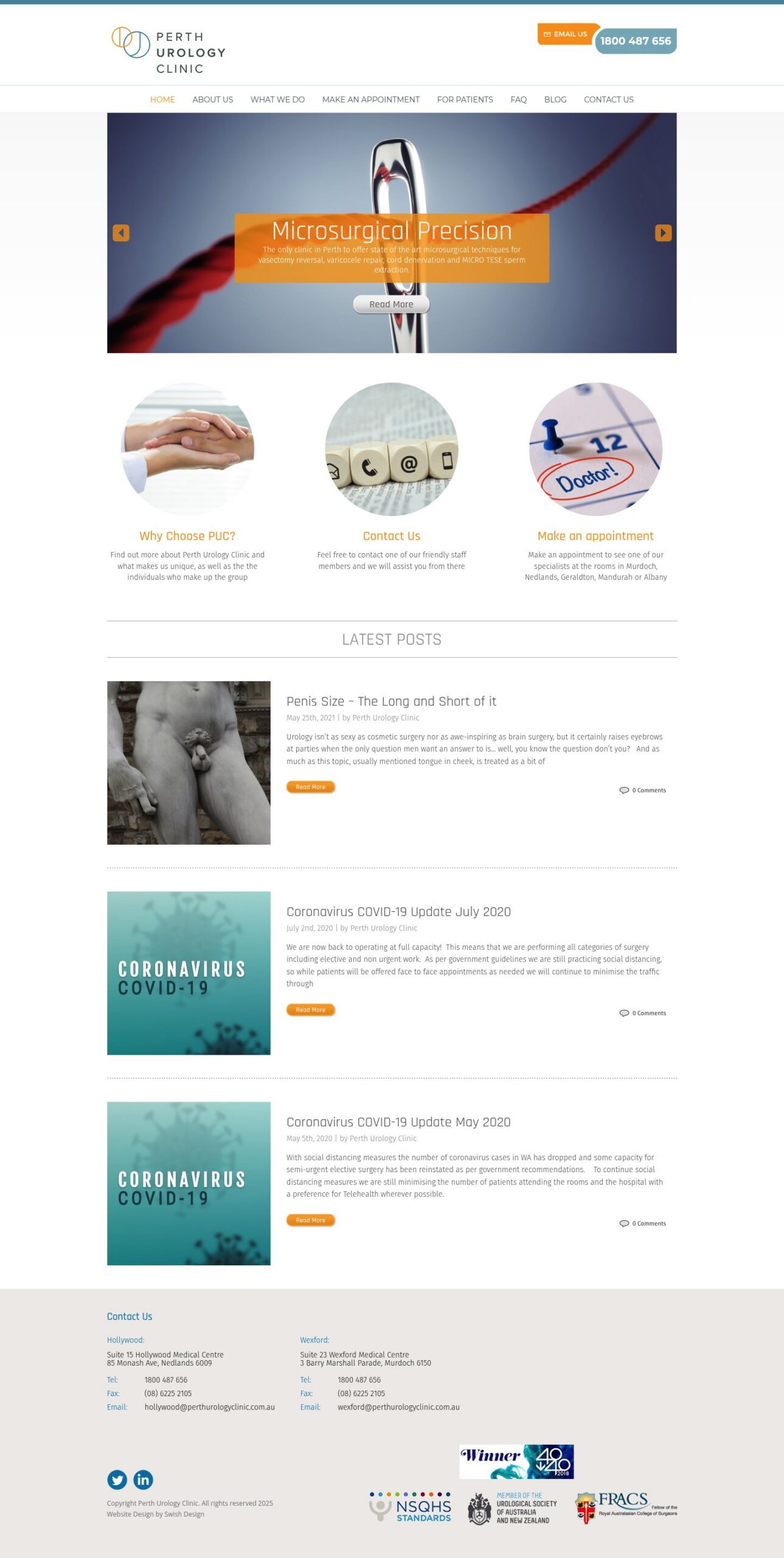
Perth Urology Clinic has built real clinical scale: specialist urologists and allied health practitioners operating from five clinic locations (Murdoch, Nedlands, Geraldton, Mandurah and Albany) and attracting about 2,298 organic visits a month. That clinical depth and multi-site capacity are not translating into GP referrals or specialist bookings because surgeon credentials, hospital affiliations and outcome evidence are hard to find and the site does not clearly guide GPs or patients to book. The low Google Business rating of 3.5 from 11 reviews is an additional drag on referral confidence when GPs or high-intent patients look up the practice.
Your online reputation
3.5
Google star rating
11
Verified reviews
Medium
Reputation strength
Google Business Profile
Your online presence — what the data reveals
AI Visibility
Moderate
Authority Score
21
out of 100
Organic traffic
2298
est. monthly visits
Traffic Trend
+10
%
past 12 months
Organic Keywords
1208
ranking terms
Keyword Trend
-50
%
past 12 months
Backlinks
1445
total
Paid traffic
0
0 paid campaigns
Digital maturity
Level 1
out of 5
You already own two assets that are hard for a competitor to copy: a multi-site clinical footprint across five Western Australian locations (Murdoch, Nedlands, Geraldton, Mandurah and Albany) and an existing inbound presence that brings about 2,298 organic visits a month supported by 406 referring domains and 1,445 backlinks. These are tangible foundations of scale and reach. If the digital presence is aligned to match that clinical depth, those assets could be turned into a steady uplift in GP referrals and confirmed specialist bookings.
How your website scores
TECH STACK
UX OBSERVATIONS
Clinical expertise is framed as passive content rather than decision-grade evidence, so GPs and patients cannot quickly verify competence and will hesitate to refer or book.
Trust signals exist but are buried in the footer and rendered small, reducing perceived legitimacy and lowering conversion from cautious referrers and first‑time patients.
CTA hierarchy is fragmented by a dominant slider, circular feature links and a long blog feed, creating friction that disperses attention and undermines direct appointment or referral conversions.
Having 2,298 visits a month while sitting on a 3.5 Google rating from 11 reviews means the site brings people in but fails to turn them into referral-ready leads or bookings, so clinical capacity sits underused. Keywords visible in search have dropped from 2,395 to 1,208 and the site ranks low nationally (83,075) with an authority score of 21, which together mean fewer high‑intent searchers find surgeon-level pages and the right referral pathways are not being found.
The three gaps holding you back
What's possible when these gaps are closed
Make surgeon credentials, hospital affiliations and outcome evidence the most prominent elements when a GP or patient lands on a clinician page. With only 11 Google reviews averaging 3.5, even modest improvements to how credentials and outcomes are presented could materially increase referral confidence and the likelihood a GP will phone or email to refer.
Rewrite the homepage hero and primary messaging to read like a group of specialist consultants serving multiple locations, not a generic consumer clinic. Direct language aimed at GPs and high‑intent patients, plus clear links to surgeon profiles and location-specific booking steps, would make the most of the current 2,298 monthly visits by improving clickthroughs to booking actions.
Map conditions and procedures to named surgeons and specific clinic locations, and present concise referral instructions and expected outcomes on those paths. Prioritising surgeon profiles, location availability and simple next steps will reduce friction so a meaningful portion of existing traffic converts into confirmed appointments rather than leaving visitors uncertain how to act.
This report was prepared by Redfox Digital using publicly available SEO, UX and reputation data.